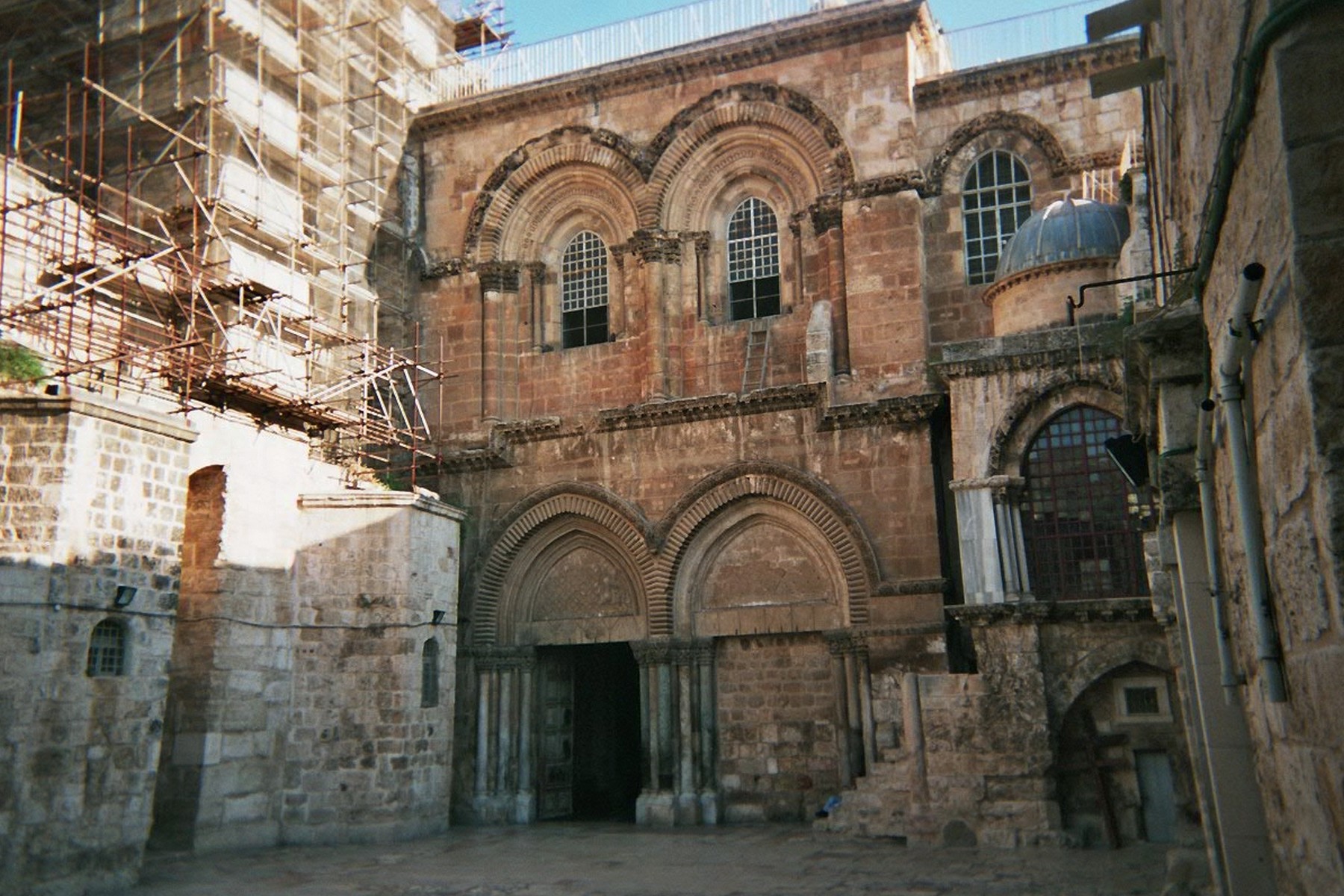
In September, a dispute over paperwork interrupted the beginning of the school year in Jerusalem. Christian schools said teachers and other staff living in the West Bank had not received renewed Israeli entry permits. Israel's military liaison agency, COGAT, disputed that account, saying eligible staff had received permits after security checks. The Christian Media Center subsequently reported that the schools reopened on September 2 after obtaining the necessary documents. Sources: COGAT response, reported by The Times of Israel; Christian Media Center.
The interruption was brief. Its significance was not. A school can own classrooms, employ teachers and command parents' trust, yet depend on another authority's permission to assemble its workforce. For the Christians of the Holy Land, survival involves more than keeping church doors open. It requires maintaining the everyday institutions that make remaining there possible.
Arguments about whether Israel protects or persecutes Christians often obscure how power actually works. Citizens and people under occupation have different rights. Religious hatred compounds restrictions imposed on Palestinians generally. An assault on a priest and the destruction of civilian life in war demand different remedies, even when both make a community fear for its future.
One faith, several political realities
Israel's Central Bureau of Statistics estimated its Christian population at 184,200 in its Christmas 2025 release, or 1.9% of the population. Its reported annual growth rate, referring to 2024, was 0.7%. Christianity is not simply disappearing everywhere under Israeli control. Yet population growth tells us little about whether a minority enjoys equal treatment or feels secure. Israel Central Bureau of Statistics.
Christian Israeli citizens possess citizenship rights that most Palestinian Christians in occupied East Jerusalem do not. Israel gave the Palestinian population of East Jerusalem permanent-resident status after occupying the city in 1967; residency is legally different from citizenship. Christians elsewhere in the West Bank live within a fragmented system of Israeli military authority and varying Palestinian Authority jurisdiction. Treating all these people as an Israeli religious minority erases the political structure shaping their choices. OCHA on East Jerusalem; US State Department, West Bank and Gaza religious-freedom report.
There is also a constitutional tension inside Israel. The 2018 nation-state Basic Law reserves national self-determination to the Jewish people. That provision is not a prohibition on Christian worship. It does make the distinction between individual rights and collective national belonging explicit. For Arab Christians, religious minority status and Palestinian identity can overlap, rather than present separate problems. Knesset: text of the Basic Law.
When hostility becomes ordinary
The clearest evidence of specifically anti-Christian abuse comes from incident monitoring. The Jerusalem-based Rossing Center's annual report documented 155 incidents in Israel and East Jerusalem in 2025. Its 2024 report had recorded 111. The 2025 total included 61 physical attacks, a category incorporating spitting, and 52 attacks on church property. These are documented incidents, not a comprehensive crime census; underreporting and changes in reporting complicate comparisons. Rossing Center, 2025 report; 2024 report.
The same report resists a blanket indictment of the police. It records condemnations and interventions, and says clergy sometimes find officers supportive and responsive. The failure is one of consistent protection; neither police officers nor Jewish Israelis can fairly be treated as a uniformly hostile bloc. Rossing Center, 2025 report.
Repeated humiliation nevertheless imposes costs beyond the incident itself. A priest deciding whether to wear a visible cross, or a family weighing whether its children will feel at home, confronts a different question from a tourist deciding whether a monument is accessible. Protection must be measured in ordinary freedom to use public space, not merely in the absence of spectacular violence.
The power of a permit
At Easter in 2025, access restrictions reached beyond the Church of the Holy Sepulchre into much of Jerusalem's Christian Quarter. In a May statement, the European Union and its member states criticised police behaviour towards worshippers, clergy and diplomats, and rejected the restrictions as justified by ceremonial safety. This was an external diplomatic assessment, not just a complaint from church leaders. EU statement, 6 May 2025.
Crowd safety and security are legitimate responsibilities. They also require proportionate rules that can be explained and challenged. When access to worship or employment depends on permits, authorities control the practical exercise of rights without formally abolishing them. The September school dispute ended quickly, but left that underlying dependence intact.
Money presents another pressure point. In June 2024, major church leaders accused municipalities of a coordinated campaign over property taxes. Jerusalem's municipality told the Associated Press that churches had failed to apply for exemptions and that the debts concerned commercial properties. AP could not establish whether municipal actions were coordinated. Associated Press.
A tax demand is not automatically religious discrimination. The substantive questions are whether comparable institutions receive comparable treatment, which properties genuinely qualify for exemptions, and whether enforcement undermines services. Churches argue that property income supports schools, hospitals and care for older people. The dispute therefore concerns the financial foundations of a community as well as the privileges of religious landowners. Associated Press.
In the West Bank, land and faith intersect
Taybeh offers a sharper example. On July 29, 2025, Jerusalem's church heads condemned burned vehicles and hateful graffiti in the Christian town, placing them within a wider pattern of settler intimidation. They also criticised what they described as an inadequate police characterisation of the violence. Patriarchs and Heads of Churches statement.
During an earlier solidarity visit, church leaders had accused Israeli authorities of enabling settlers' presence and failing to protect residents. AP reported that the military did not immediately answer those allegations; it had previously said it acted against outlaw settlers. Associated Press, 14 July 2025.
In Taybeh, the struggle over Palestinian land threatens a specifically Christian presence. Religious persecution alone is too narrow a description: Palestinian neighbours of other faiths also face settler violence. Yet a purely territorial explanation leaves little room for the sectarian intimidation the churches describe.
Palestinian governance also deserves scrutiny. The Palestinian Authority's Basic Law combines religious-freedom and equality provisions with Islam's status as the official religion and sharia's role as a principal legislative source. Those tensions belong in any serious assessment of minority rights; they do not transfer responsibility for Israeli restrictions or settler violence away from those imposing or committing them. US State Department.
Gaza's catastrophe cannot be reduced to discrimination
On July 17, 2025, an Israeli shell struck Gaza's Holy Family church compound, killing three people, according to church officials. Israel expressed regret and described the incident as accidental. The compound sheltered Christians and Muslims. Associated Press.
The church offered no reliable sanctuary. The available evidence does not establish that its occupants were struck because they were Christian. The Latin Patriarchate explicitly placed the tragedy alongside the suffering of other civilians across Gaza. A small community's religious continuity can be devastated by war without religious identity being the demonstrated motive for each strike. Latin Patriarchate, 17 July 2025.
The practical test is whether Christians can remain as neighbours, teachers, workers and worshippers, rather than merely as custodians of monuments. That requires prosecution of hate crimes, protection from settler violence, predictable access arrangements and protection of civilians. Preserving Christianity's holy places while making ordinary Christian life untenable would be a profound failure of preservation.